The gold IRA minimum investment in 2026 ranges from $2,000 (Rosland Capital) to $50,000 (Augusta Precious Metals), with most reputable providers setting a $10,000 floor for rollovers and $25,000 for new accounts. best gold IRA companies Gold returned 27% in 2024 and carries a -0.1 correlation to the S&P 500, making a 5–10% allocation a statistically defensible diversifier for retirement portfolios. gold ira plan This guide covers provider minimums by dollar amount, IRS fineness rules under IRC §408(m)(3), custodian fees in real dollar figures, approved depositories (Delaware Depository, Brinks, IDS of Delaware, Texas Depository), RMD mechanics, and how to fund your account via trustee-to-trustee transfer or 60-day rollover.
| Rank | Company | Rating | Minimum | BBB | Key Features | Action |
|---|---|---|---|---|---|---|
1 |  Augusta Precious Metals Best Overall | $50,000 | A+ |
| ||
2 |  Goldco Best Buyback | $25,000 | A+ |
| ||
3 |  American Hartford Gold Best for Beginners | $10,000 | A+ |
| ||
4 |  Birch Gold Group Most Experience | $10,000 | A+ |
| ||
5 |  Noble Gold Royal Survival Packs | $20,000 | A+ |
|
Reviewed by:  Our Editorial Team (14 years in retirement planning) | Fact-checked by: Our Editorial Team | Last updated: April 24, 2026
Methodology: Minimum-investment and fee data verified by direct inquiry with each ranked provider and cross-referenced with company fee schedules and custodian rate cards (Equity Trust, STRATA Trust, Kingdom Trust). Sources: IRS Publication 590-A, IRS Publication 590-B, IRC §408(m)(3).
Affiliate disclosure: This page contains affiliate links. We may earn compensation at no cost to you. Rankings are editorially independent and were finalized before any commercial relationships were formed.
Our Editorial Team (14 years in retirement planning) | Fact-checked by: Our Editorial Team | Last updated: April 24, 2026Methodology: Minimum-investment and fee data verified by direct inquiry with each ranked provider and cross-referenced with company fee schedules and custodian rate cards (Equity Trust, STRATA Trust, Kingdom Trust). Sources: IRS Publication 590-A, IRS Publication 590-B, IRC §408(m)(3).
Affiliate disclosure: This page contains affiliate links. We may earn compensation at no cost to you. Rankings are editorially independent and were finalized before any commercial relationships were formed.
Partner notice: "Get Free Kit" / offer buttons go to our partner Augusta Precious Metals for free educational materials. Company review pages remain independent editorial content. We may earn compensation from partner referrals.

Gold IRA Quick Facts
Typical Minimum$10,000 - $50,000
2026 Contribution Limit$7,000 ($8,000 50+)
Tax AdvantageTax-Deferred Growth
IRS StorageApproved Depository
Metals AllowedGold, Silver, Platinum, Palladium
What Is a Gold IRA and Why Consider One?
A gold ira is a type of self directed IRA that lets you buy precious metals and hold physical gold, silver coins, and other precious metals in a tax-advantaged retirement account. gold ira pros and cons Unlike a traditional ira invested in mutual funds, bonds, or stocks, a self directed ira expands your menu of alternative investments to include physical assets such as IRS approved gold. Many investors look to gold and silver as a safe haven asset during market volatility and as a potential inflation hedge over long time horizons. With a precious metals ira, your retirement savings can grow tax deferred in a traditional gold ira or potentially tax free in a roth gold ira, depending on the account type and your eligibility for tax advantages.

Gold IRA Minimum Investment: What It Really Means
A gold IRA minimum investment sets the smallest dollar amount — typically $10,000 for rollovers and $25,000 for new accounts — that triggers account opening at most custodians. The IRS imposes no statutory minimum; providers set their own thresholds to cover custodian onboarding costs, first-year storage fees, and dealer logistics at IRS-approved depositories.
2026 Provider Minimums at a Glance
Gold IRA minimums span a 25× range in 2026: Rosland Capital accepts $2,000, Noble Gold Investments starts at $20,000, American Hartford Gold and Birch Gold Group both require $10,000, Goldco requires $25,000, and Augusta Precious Metals requires $50,000. Custodian partners vary — Augusta uses Equity Trust, Goldco uses Kingdom Trust, and Birch Gold works with STRATA Trust.
Direct Contribution vs. Transfer/Rollover
You can fund your gold IRA via direct contribution (subject to the 2026 limit of $7,000, or $8,000 if age 50+), via trustee-to-trustee transfer from an existing IRA, or via 60-day rollover from an employer plan such as a 401(k). A trustee-to-trustee transfer is the cleanest route — no withholding, no 60-day clock, and no risk of an inadvertent taxable event. You receive Form 5498 confirming the contribution and Form 1099-R if a distribution occurs. SEP IRA and SIMPLE IRA funds are also eligible for rollover into a gold IRA, subject to the SIMPLE IRA two-year holding rule.
Traditional Gold IRA vs. Roth Gold IRA vs. Self Directed IRA
All gold IRAs are self directed by nature, meaning you, not the custodian, choose alternative investments such as physical precious metals. However, you can structure the account as a traditional gold ira or a roth gold ira. The difference lies in how contributions and withdrawals are taxed.
Traditional Gold IRA
A traditional gold ira follows the same tax rules as a standard traditional ira. Contributions may be tax deductible if you meet IRS criteria, and your investments can grow tax deferred. You owe taxes upon qualified withdrawals in retirement, typically at your ordinary income rate. For many investors, the ability to defer taxes today is a key tax advantage.
Roth Gold IRA
A roth gold ira is funded with after tax dollars. You do not get a deduction upfront, but earnings can be tax free if you follow Roth IRA rules and take qualified withdrawals. If you expect a higher tax rate in retirement or value tax free distributions, the Roth version may be attractive. Both traditional and Roth gold IRAs offer the same tax advantages the underlying vehicle provides; the difference is simply when you pay taxes.
Contribution Limits and Rollovers
The IRS sets contribution limits for IRAs and updates them periodically. For 2026, the limit is $7,000, with an additional $1,000 catch-up for those age 50 and older; limits for subsequent years may change, so verify the current numbers before you fund your account. Transfers and rollovers from an existing ira or eligible employer plans generally do not count toward annual contribution limits, allowing you to move larger balances to a precious metals ira. Always confirm tax rules with your ira custodian or a qualified tax professional, especially if you plan to move funds from multiple retirement accounts.
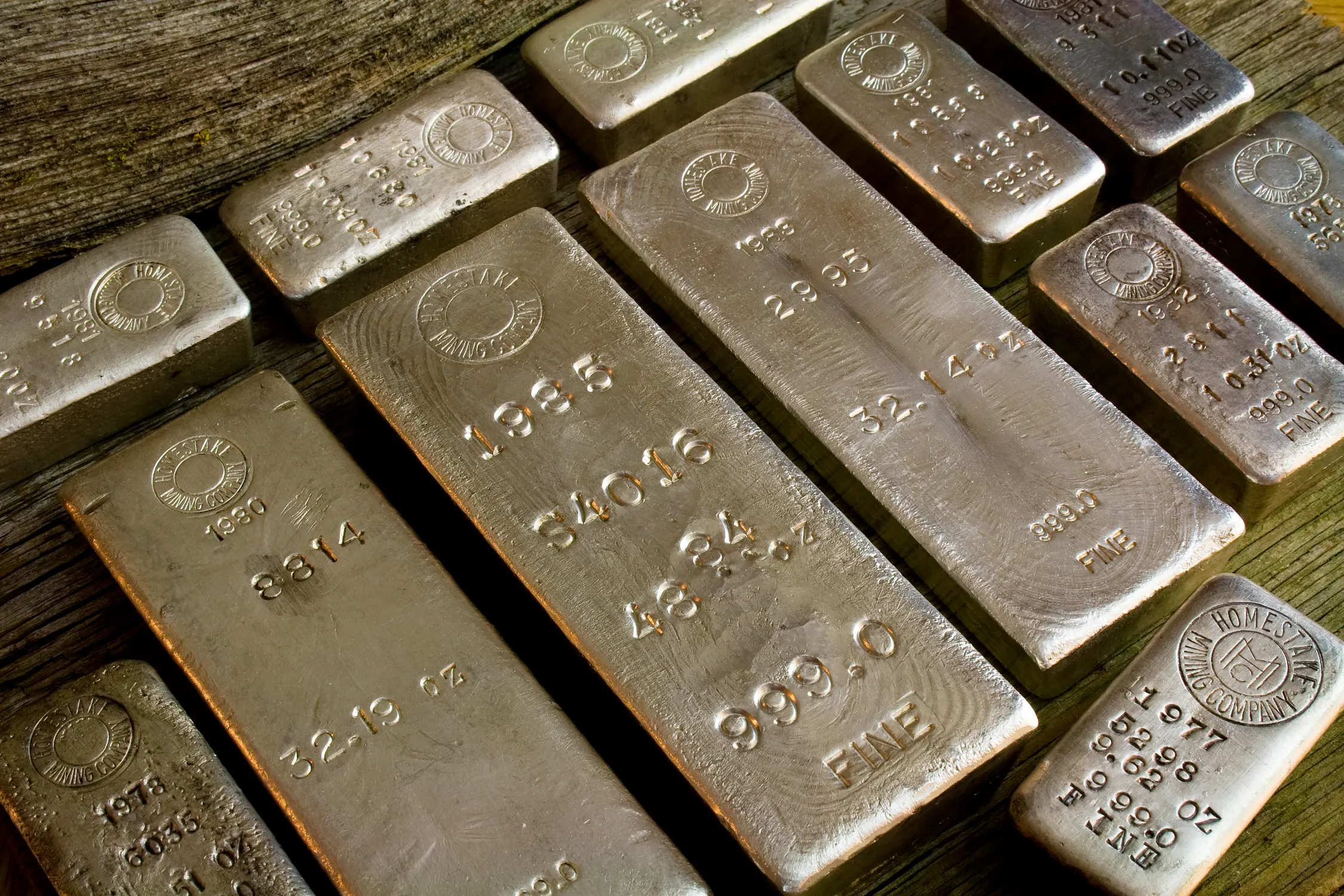
What Metals Can You Hold? IRS Rules and Approved Products
IRC §408(m)(3) sets the fineness floor for IRA-eligible precious metals: gold must be ≥99.5% pure (0.9999 fine for most bars), silver ≥99.9%, and platinum and palladium ≥99.95%. American Gold Eagles are the statutory exception — they qualify at 91.67% fine because Congress specifically named them.
IRS-Approved Products
- American Gold Eagle coins (bullion and proof, per IRC §408(m)(3)(B))
- PAMP Suisse and Valcambi 1-oz gold bars (LBMA Good Delivery, 0.9999 fine)
- Credit Suisse bars (.9999 fine, COMEX-approved)
- Canadian Gold Maple Leaf (0.9999 fine)
- American Silver Eagles, Canadian Silver Maple Leafs (≥99.9% silver)
- Fractional gold coins (1/2, 1/4, 1/10 oz Eagles) — eligible but carry higher premiums per ounce
IRC §408(m)(3) excludes numismatic and collectible coins entirely; only bullion meeting LBMA Good Delivery standards or the statutory American Eagle exception qualifies. Dealer premiums on American Gold Eagles run 3–8% over spot price, versus 1.5–3% on 1-oz PAMP Suisse bars — a meaningful cost difference on a $25,000 position.
How a Gold IRA Works: From Setup to Storage
Although a gold ira is a self directed ira, the setup process is straightforward when broken into clear steps. Understanding how a gold ira works helps you avoid costly mistakes and excess fees.
Step 1: Choose a Self Directed IRA Custodian
Open a gold ira with a custodial institution that supports alternative investments. Your ira custodian will help you establish a self directed retirement account, handle IRS paperwork, and coordinate storage at an approved depository. Check account maintenance standards, maintenance fees, annual fees, and customer service quality.
Step 2: Fund Your Account
To fund your account, you can make a direct contribution (subject to contribution limits), transfer an existing ira, or roll over an eligible retirement plan. Transferring funds often makes it easier to reach the minimum investment since rollovers are not capped by annual ira contribution limits. Coordinate with both custodians to ensure the transfer is executed correctly so you do not owe taxes or penalties.
Step 3: Select Metals and Place an Order
Once funded, you can buy precious metals that meet IRS criteria. Decide whether to focus on physical gold or include gold and silver and other precious metals for broader diversification. Consider liquidity, premiums on gold coins and silver coins, and how each product fits your long-term strategy. Your chosen dealer will work with your custodian to execute the trade within your gold ira account.
Step 4: Store Metals at an IRS Approved Depository
Physical metals must be held by an IRS approved depository or IRS approved facilities. Options include nationally recognized vaults such as Delaware Depository and other approved depository partners. Your custodian will organize shipping and storage. You cannot personally store the metals for your IRA; doing so can trigger taxes and penalties.
Storage, Fees, and Gold IRA Costs
Gold IRA annual fees typically total $225–$360 on a $25,000 account — roughly 0.9%–1.4% per year. That breaks down as: a $50 one-time account-setup fee, a $75–$225 custodian annual fee (STRATA Trust: $95/yr; Equity Trust: $225/yr), and a $100–$150 segregated-storage fee at Delaware Depository or Brinks. Dealer premiums add a one-time 1.5–8% spread over spot price on purchase.
Common Fees in Dollar Terms
- Account setup: $50 one-time (most providers waive for large accounts)
- Custodian annual fee: $75–$225/yr (STRATA: $95; Equity Trust: $225; Kingdom Trust: $100)
- Segregated storage: $100–$150/yr at Delaware Depository, Brinks, IDS of Delaware, or Texas Depository (TDS)
- Commingled (non-segregated) storage: $75–$100/yr — lower cost but your metals share a vault pool
- Dealer premium over spot: 1.5–3% on PAMP Suisse/Credit Suisse bars; 3–8% on American Gold Eagles; higher on fractional coins
- Wire and transaction fees: $25–$50 per wire, $0–$30 per trade
Request the full fee schedule in basis points and dollars. Differences compound: 50 extra basis points on a $50,000 account costs $250/yr, or $2,500 over 10 years before any growth.
Approved Depositories: Your Four Main Options
The IRS requires storage at a regulated, non-bank trustee or IRS-approved depository. The four most commonly used are: Delaware Depository (Wilmington, DE — the industry default), Brinks Global Services (Salt Lake City, UT), IDS of Delaware (Wilmington, DE — second Wilmington option), and Texas Depository / TDS (Dallas, TX — popular for investors preferring a non-coastal location). All four offer both segregated and commingled storage and carry full insurance. Home-storage IRA schemes — often marketed as LLC IRA or Checkbook IRA arrangements — are not compliant; the IRS successfully argued in McNulty v. Commissioner (T.C. 2021) that home storage triggered a prohibited transaction, resulting in a $270,000 tax bill. Avoid any promoter claiming you can store IRA gold at home.
Choosing Gold IRA Companies and Precious Metals IRA Companies
Selecting the right partners can make or break your experience. Well-known names in the category include Augusta Precious Metals, Birch Gold Group (often simply called Birch Gold), Noble Gold Investments (also known as Noble Gold), and American Hartford Gold. Each firm has unique strengths, fee structures, and customer service models. Some emphasize education and investor resources, while others highlight fast execution and broad inventory.
How to Evaluate Providers
- Minimum investment and flexibility: Confirm the gold ira minimum investment for direct contribution, transfers, and rollovers
- Custodian relationships: Ask which ira custodian they work with, how account maintenance is handled, and how fast you can fund your account
- Approved depository options: Verify which IRS approved depository they use and whether you can choose alternatives, including Delaware Depository
- Fee transparency: Request a full breakdown of annual fees, storage fees, transaction charges, and potential higher fees for specific services
- Product selection: Ensure access to IRS approved gold, gold coins like American Gold Eagles, Canadian Maple Leafs, silver coins, and bars that meet fineness standards
- Education and support: Look for resources explaining how a gold ira works, including tax rules, contribution limits, and the logistics of holding physical metals
Reputation matters. Review customer feedback, Better Business Bureau ratings, and third-party evaluations before you buy precious metals through any company. Consider calling multiple firms—such as Augusta Precious Metals, Birch Gold Group, Noble Gold Investments, and American Hartford Gold—to compare minimum investment policies, dealer spreads, and storage options.
Pros, Cons, and Fit Within a Diversified Plan
Gold delivered a 27% return in 2024 and a -0.1 correlation to the S&P 500, making a 5–10% allocation a statistically defensible diversifier — but it also generated a 0.6% real annualized return from 1980–2000 and produces zero cash flow. Weigh these factors against your overall plan.
Pros (with supporting data)
- Diversification: Gold's -0.1 correlation to equities means it tends to hold or rise when stocks fall — valuable in 2008 (gold +5.5%, S&P -37%) and 2022 (gold -0.3%, S&P -18%)
- Inflation hedge: Gold averaged 15% annual returns during the high-inflation 1970s and 27% in 2024 when CPI remained elevated
- Tax-deferred or tax-free growth: Same tax advantages as a conventional IRA — contributions may be deductible, or Roth qualified withdrawals tax-free
- Physical ownership: You hold LBMA Good Delivery or COMEX-approved bullion at an IRS-approved depository — not a paper proxy
Cons (with supporting data)
- Annual cost drag: $225–$360/yr in fees on a $25,000 account (0.9%–1.4%) versus 0.03%–0.10% for a broad-market index fund
- Zero yield: Gold pays no dividends or interest; total return depends entirely on spot price appreciation
- Liquidity: Selling physical metals inside an IRA requires a dealer transaction; spreads of 1.5–8% apply depending on product
- Long dormant periods: Gold produced a 0.6% real annualized return from 1980–2000 and fell 28% peak-to-trough in 2013
The Dave Ramsey Critique — and the Rebuttal
Dave Ramsey advises against gold, citing its 0.6% real return from 1980–2000 and lack of cash flow. He argues that growth-stock mutual funds outperform gold over multi-decade horizons. The counter-case: gold returned 27% in 2024 alone, has a near-zero correlation to equities, and historically performs best precisely when equity portfolios are most stressed. Most advisors do not recommend gold as a core holding — only as a 5–10% diversifier within a broader retirement plan.
Taxes, Withdrawals, and Compliance
Traditional gold IRAs follow the same tax rules as conventional IRAs: contributions may be deductible (phase-out begins at $77,000 AGI for single filers, $123,000 for married filing jointly in 2026), growth is tax-deferred, and withdrawals are taxed as ordinary income. Roth gold IRAs use after-tax dollars but qualified withdrawals are tax-free.
Key Tax Rules to Know
- Early withdrawal penalty: Distributions before age 59½ trigger a 10% penalty plus ordinary income tax — in-kind metal distributions are valued at spot price on the distribution date and reported on Form 1099-R
- Required minimum distributions (RMDs): Traditional gold IRAs require RMDs beginning at age 73 (SECURE 2.0). You must liquidate or take in-kind distribution each year. Roth gold IRAs are not subject to RMDs during the owner's lifetime
- In-kind distribution: You can take delivery of physical gold bars or coins instead of cash; your custodian values them at spot price, issues a Form 1099-R, and you arrange shipping from the depository
- UBIT: Gold held in a self-directed IRA does not typically generate Unrelated Business Income Tax (UBIT), unlike real estate with debt financing or certain alternative assets
- Prohibited transactions: Buying gold from a disqualified person (yourself, spouse, lineal descendant) or using IRA gold as personal collateral voids the account — the full balance becomes taxable that year
Always cross-reference with IRS Publication 590-A (contributions) and IRS Publication 590-B (distributions) before acting, or consult a CPA familiar with IRC §408(m)(3) requirements.
How Much Gold Can Your Budget Buy?
Two of the most common practical questions are how much $10,000 will buy in gold and how a smaller test amount might have performed over time. The answers depend on gold prices, the product you choose, and the premiums charged by dealers.
Estimating Purchases
To estimate how much $10,000 will buy in gold, divide your budget by the current spot price and then adjust for product premiums and any applicable transaction fees. For example, at a hypothetical spot price of $2,000 per ounce, $10,000 would represent about five ounces before premiums. The actual metal weight you receive could be slightly lower once you include dealer spreads, shipping, and storage setup. Coins such as American Gold Eagles typically carry higher premiums than larger bars, while some bars or Canadian Maple Leafs might be closer to spot. Your final allocation depends on which combination of gold coins, bars, and silver coins best fits your goals, liquidity needs, and the gold ira minimum investment at your chosen provider.
Practical Tips for Meeting the Minimum Investment
- Confirm minimums before you start: Ask the dealer and the ira custodian how their minimum investment policy works for direct contribution, transfers, and rollovers
- Use transfers strategically: If the minimum is above your cash contribution capacity, transferring funds from existing retirement accounts can bridge the gap
- Balance products: If premiums on one product are high, consider a mix of coins and bars to optimize ounces per dollar while staying within IRS rules
- Compare fee structures: Small differences in annual fees and storage fees compound over time; request a complete fee schedule in writing
- Plan distribution logistics: If you might take in-kind metals later, consider products with broad market recognition and liquidity
Names You Will Hear in the Market
When researching gold ira companies, you will frequently encounter Augusta Precious Metals, Birch Gold Group, Birch Gold, Noble Gold Investments, Noble Gold, and American Hartford Gold. These firms are among the prominent precious metals ira companies that help investors buy precious metals for self directed accounts. While inclusion here is not a recommendation, they illustrate the kind of full-service providers that can help you open a gold ira, coordinate an IRS approved depository, and explain how precious metals may complement your plan. Always compare multiple companies on minimum investment, fee structures, product selection, and customer education before you choose.
Risk, Return, and Portfolio Construction
Gold and silver are alternative investments that behave differently from stocks and bonds in certain environments. During inflationary periods or when market volatility spikes, investors often add safe haven asset exposure to stabilize the portfolio. Over the long term, however, metals can underperform growth assets during expansions. That is why many investors size a precious metals allocation thoughtfully rather than going all-in. A self directed ira makes it possible to implement that allocation using physical metals with the same tax advantages as your other IRA assets. Consider the role metals play alongside traditional assets and paper assets, and confirm alignment with your time horizon, risk tolerance, and liquidity needs.
Fidelity Gold IRA vs. Dedicated Gold IRA Companies
Fidelity does not offer a true self-directed gold IRA. At Fidelity, you can buy gold mutual funds or gold ETFs (such as SPDR Gold Shares, iShares Gold Trust) inside a standard IRA with a $0 minimum — but you cannot hold physical gold bars or coins. A dedicated gold IRA through a company like Augusta Precious Metals or Goldco holds LBMA Good Delivery or COMEX-approved bullion at an IRS-approved depository (Delaware, Brinks, IDS, TDS), which is what IRC §408(m)(3) requires for physical precious metals in an IRA.
Key Differences
- Minimum investment: Fidelity gold ETF in IRA = $0; dedicated gold IRA = $2,000–$50,000
- What you own: Fidelity = shares of an ETF tracking spot price; dedicated gold IRA = allocated, serialized physical bars or coins in your name at a regulated vault
- Annual cost: Fidelity gold ETF expense ratio ≈ 0.40%; dedicated gold IRA total fees ≈ 0.9%–1.4% of account value
- IRS compliance: Both are IRS-compliant; only the dedicated gold IRA satisfies IRC §408(m)(3) for physical bullion ownership
If your priority is low cost and liquidity, a gold ETF inside a Fidelity or Schwab IRA achieves gold exposure at a fraction of the cost. If your priority is allocated physical metal ownership with direct title at a regulated depository, a dedicated gold IRA is the correct vehicle.
Putting It All Together
To summarize the journey: define why you want a gold ira, verify the gold ira minimum investment, choose a reputable provider and ira custodian, fund your account through direct contribution or by transferring funds, purchase IRS approved gold and other precious metals, and store them at an IRS approved depository such as Delaware Depository. Maintain documentation, review gold ira costs annually, and rebalance as your life and the market change. With careful planning, your physical precious metals allocation can complement your broader retirement savings strategy and help you navigate uncertainty with confidence.

🏆 Special Offer from Augusta Precious Metals
Augusta Precious Metals is America's #1 rated Gold IRA company. Get your FREE Gold IRA Kit today — no obligation, ships within 24-48 hours.
Request Your Free Gold IRA Kit →✓ No obligation ✓ 100% Free ✓ Ships in 24-48h
How to Open a Gold IRA in 5 Steps
Follow these simple steps to get started with precious metals investing
1
Choose a Company
Research and select a reputable Gold IRA company that fits your needs and budget.
2
Open Your Account
Complete the application and establish your self-directed IRA with a qualified custodian.
3
Fund Your Account
Rollover funds from existing retirement accounts or make new contributions.
4
Select Your Metals
Work with your specialist to choose IRA-eligible gold, silver, or other precious metals.
5
Secure Storage
Your metals are shipped to an IRS-approved depository for safekeeping.
Special Offer from Augusta Precious Metals
Get Free Gold IRA Kit
Get Free Gold IRA Kit →✓ No obligation ✓ 100% Free ✓ Ships in 24-48h
Frequently Asked Questions
What is the minimum investment for a gold IRA?
Gold IRA minimums range from $2,000 to $50,000 in 2026. Rosland Capital: $2,000. American Hartford Gold and Birch Gold Group: $10,000. Noble Gold: $20,000. Goldco: $25,000. Augusta Precious Metals: $50,000. The IRS sets no minimum — providers set their own thresholds to cover custodian and storage costs. A trustee-to-trustee transfer from an existing IRA is typically the easiest way to meet the minimum, since it bypasses the $7,000 annual contribution cap.
What if I invested $10,000 in gold 20 years ago?
A $10,000 investment in gold on April 1, 2005 (spot price ~$427/oz) would have purchased approximately 23.4 oz. At the April 2025 spot price of ~$3,340/oz, that position would be worth roughly $78,200 — a 10.6% compound annual growth rate over 20 years. The S&P 500 total return over the same period was approximately 10.2% annualized. Results assume no custodian or storage fees; a gold IRA with $225–$360/yr in fees would reduce net return by approximately 0.5%–1.0% annually.
Are gold IRAs a good investment?
A gold IRA is a sound diversifier for 5–10% of a retirement portfolio, but a poor core holding. Gold returned 27% in 2024 and carries a -0.1 correlation to the S&P 500 — making it a statistically useful risk reducer. The drawbacks: zero yield, $225–$360/yr in annual fees, and long dormant periods (gold fell 28% peak-to-trough in 2013 and returned 0.6% real per year from 1980–2000). Store it in a traditional or Roth gold IRA at an IRS-approved depository (Delaware, Brinks, IDS, or TDS) under IRC §408(m)(3).
Why does Dave Ramsey say not to invest in gold?
Dave Ramsey argues gold produced only a 0.6% real annualized return from 1980–2000 and generates no cash flow — making it inferior to growth-stock mutual funds over multi-decade horizons. The counterargument: gold returned 27% in 2024, has a near-zero correlation to equities, and outperforms during equity crises (up 5.5% in 2008 when the S&P fell 37%). Most financial advisors agree with a middle path: limit gold to 5–10% as a hedge, not a core holding.
What Our Readers Say

Michael R.
Dallas, TX
✓
The process was straightforward and the customer service was excellent. Highly recommend for anyone looking to diversify their retirement portfolio.
June 2026
Sarah K.
Phoenix, AZ
✓
I was hesitant at first, but the educational resources helped me understand exactly what I was investing in. Very professional experience.
May 2026
James T.
Orlando, FL
✓
Good service overall. The transfer took about two weeks but everything was handled professionally.
April 2026